









In meteorology, the dew point is the temperature at which air reaches saturation with water vapor (the temperature to which the air must cool for it to become completely saturated with water). If the air continues to cool lower than this temperature, airborne water will begin to condense in the form of dew. If an object, such as concrete, is cooler than the air surrounding it, then droplets of water will condense on the surface. When this temperature is below freezing, it is called the frost point.

How Does Dew Point Affect Comfort?
A high dew point (over 65°F or 18°C) feels humid, sticky, and oppresive because evaporation slows, while a low dew point (50–60°F or 10–15°C) feels dry and comfortable.
Dew Point vs Humidity
Many people confuse dew point with humidity. By humidity, we usually mean relative humidity, which compares the amount of water vapor in the air to the maximum it could hold at a given temperature. The same moisture in warmer air yields a lower relative humidity than in cooler air because warm air can accommodate more vapor. Picture a glass: the same volume fills a small glass to 90% but only 50% of a large one.

The dew point (the saturation temperature) is a better indicator of actual moisture content because it stays the same regardless of temperature, while relative humidity changes with temperature if pressure and moisture remain constant.
Why Dew Point Matters in Forecasting
Dew point is important for weather forecasting because it signals the likelihood of dew, frost, fog, low clouds, and precipitation. High values indicate abundant moisture, fueling thunderstorms and heavy rain when lifting mechanisms are present. In cold seasons, the dew point (and frost point) inform icing and frost risk.
How to Calculate Dew Point
You can estimate the dew point from temperature and relative humidity using common formulas (such as the August-Roche-Magnus or Arden Buck equations). In practice, meteorologists:
- Convert temperature (T) and relative humidity (RH) into saturation vapor pressure and actual vapor pressure.
- Solve for the temperature at which saturation would occur.
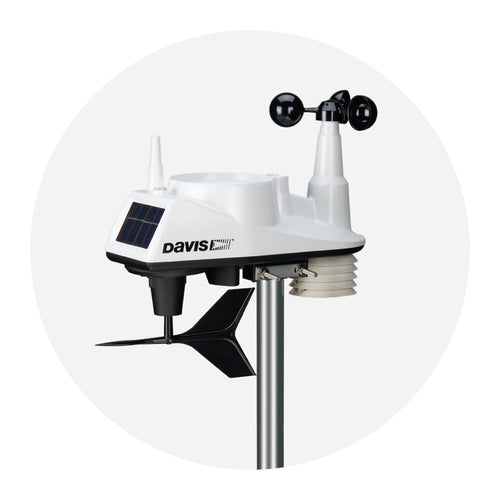
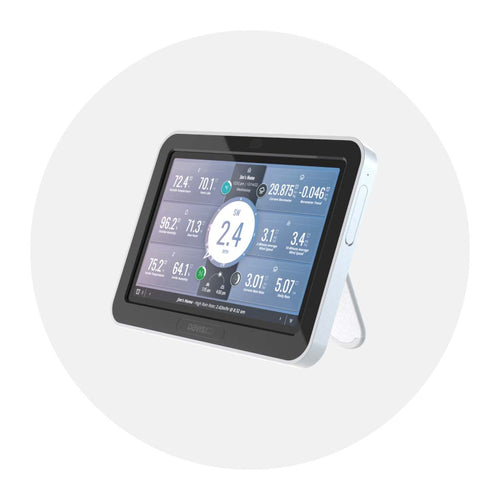
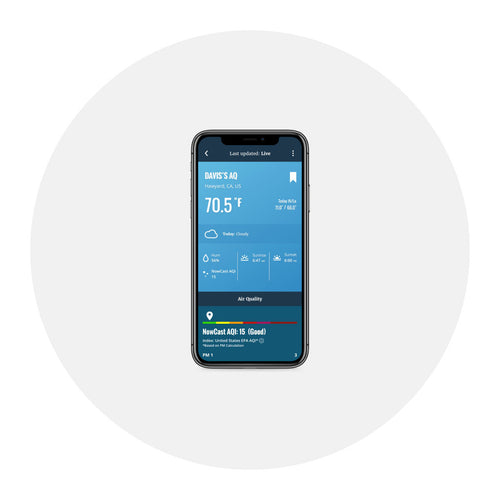
Many weather stations and apps perform this calculation automatically from measured T and RH. Davis Instruments includes dew point as a key data point on its Vantage Vue and Vantage Pro2 weather stations. This piece of data can be useful for amateur weather hobbyists, professionals, researchers, and for the classroom.